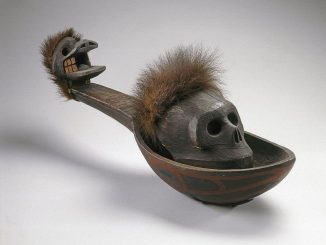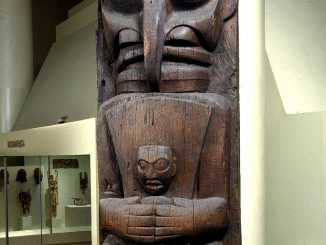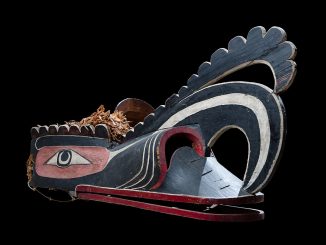
Kwakwaka’wakw Potlatch
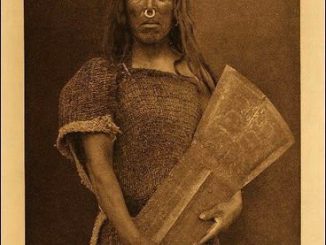
The potlatch culture of the Northwest is well known and widely studied. It is still practised among the Kwakwaka’wakw, as is the lavish artwork for which they and their neighbours are so renowned. The phenomenon […]
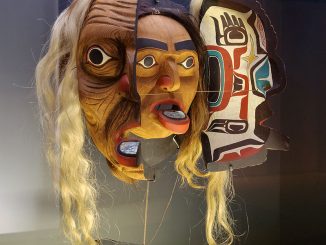
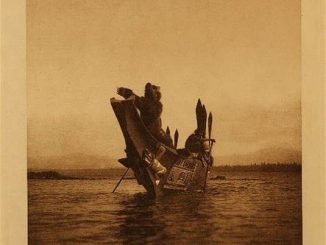
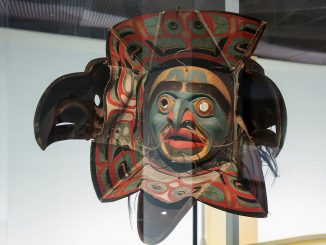
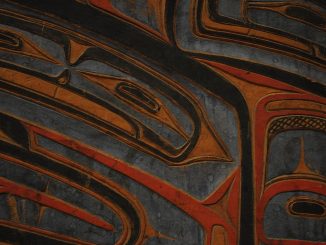
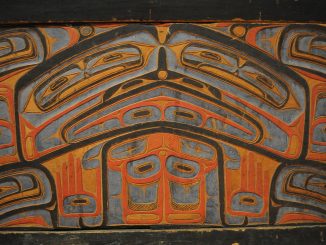
Arts In the old times, the Kwakwaka’wakw believed that art symbolized a common underlying element shared by all species. Kwakwaka’wakw arts consist of a diverse range of crafts, including totems, masks, textiles, jewelry and carved […]
The Kwak’wala language is a part of the Wakashan language group. Word lists and some documentation of Kwak’wala were created from the early period of contact with Europeans in the 18th century, but a systematic […]
The name Kwakiutl derives from Kwagu’ł—the name of a single community of Kwakwaka’wakw located at Fort Rupert. The anthropologist Franz Boas had done most of his anthropological work in this area and popularized the term […]
The Wuikinuxv, also rendered Oowekeeno /əˈwiːkənoʊ/, Wuikenukv, Wikeno, Owikeno, Oweekano, Awikenox, and also known as the Rivers Inlet people, are an Indigenous First Nations people of the Central Coast region of the Canadian province of […]
The Nuxalk people, also referred to as the Bella Coola, Bellacoola or Bilchula, are an Indigenous First Nation in Canada, living in the area in and around Bella Coola, British Columbia. Their language is also […]
The Heiltsuk language is part of what is called the Wakashan language family. Related to other languages in the group as French is to Spanish, the Heiltsuk language is similar to Wuikyala (the language of […]
The 1951 amendment to the Indian Act (Canada’s Law regarding First Nations), removed some of the most repressive elements, including the ban on the potlatch. While the Heiltsuk continued to practice elements of the feast […]
Traditionally, the Heiltsuk divided the year into a secular summer harvesting season and a winter sacred season, when most ceremonies were conducted. “The pattern of Heiltsuk resource use has changed somewhat in the past two […]
Their first contact with Europeans was most likely in 1793, and the name “Bella Bella” dates back to 1834. They generally refer to themselves as Heiltsuk. As with many other indigenous peoples of the Pacific […]
Copyright © 2026 | MH Magazine WordPress Theme by MH Themes