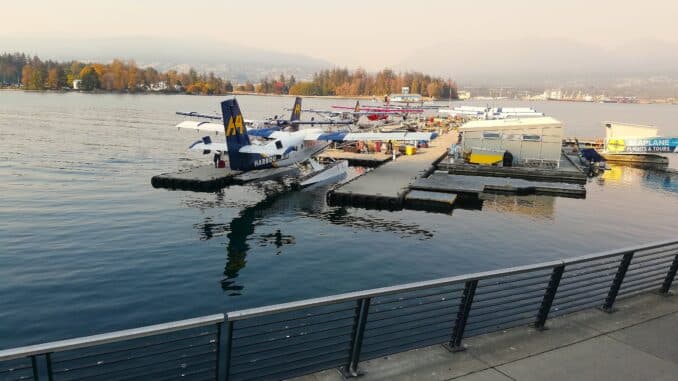
At the edge of downtown Vancouver, a different kind of airport operates directly on the water. Instead of long concrete runways, seaplanes use the sheltered surface of Coal Harbour to begin and end their journeys across British Columbia.
From the waterfront, visitors can watch aircraft resting beside floating docks, preparing for departure, or returning from flights over the Pacific coast. Behind them, the mountains of the North Shore create a striking contrast with Vancouver’s modern skyline.
This is Vancouver Harbour, where aviation remains closely connected to the sea and the geography of Canada‘s western coastline.
Harbour Air Seaplanes at Vancouver Harbour | Takeoffs & Landings
A Working Seaplane Harbour in Downtown Vancouver
Vancouver Harbour is more than a scenic waterfront. It is an active transportation centre connecting downtown Vancouver with destinations across coastal British Columbia.
The seaplane terminal is situated in Coal Harbour, close to the Vancouver Convention Centre and Canada Place. Its location allows passengers to begin their journeys directly from the city centre without travelling to a conventional airport.
The waterfront also provides a fascinating opportunity to observe aviation at close range.
Aircraft move slowly between their floating docks and designated operating areas. Before departure, pilots prepare their aircraft and assess the conditions around the harbour.
When cleared for takeoff, a floatplane accelerates across the water until its wings generate sufficient lift to become airborne.
The transition from water to sky is one of the most distinctive moments in seaplane aviation.
The Art of Taking Off and Landing on Water
Flying a seaplane involves challenges that differ from operating a conventional land aircraft.
Water conditions, wind direction, visibility, and surrounding marine activity all influence flight operations.
Unlike aircraft using paved runways, floatplanes must operate on a surface that constantly changes.
Small waves, currents, and wind can affect how an aircraft moves across the water.
During takeoff, the aircraft accelerates until its floats rise into a more efficient position on the water, reducing resistance before liftoff.
Landing requires careful control of speed and descent. As the aircraft approaches the harbour, the pilot aligns the aircraft with a suitable landing path and brings the floats into contact with the water.
The aircraft then slows before taxiing toward its dock.
For observers along Vancouver’s waterfront, these operations offer an unusual combination of aviation and maritime activity.
Connecting Vancouver with Coastal British Columbia
The importance of seaplanes becomes clearer when considering British Columbia’s geography.
Vancouver Island, the Gulf Islands, and many smaller coastal communities are separated from the mainland by waterways.
Although ferries and highways provide important connections, seaplanes offer another transportation option, particularly for journeys between city centres and coastal destinations.
From Vancouver Harbour, scheduled services connect passengers with Victoria, Nanaimo, and Salt Spring Island, among other destinations depending on the season.
These routes serve residents, business travellers, and visitors exploring British Columbia.
A flight across the Strait of Georgia can reveal a landscape of forested islands, coastal mountains, and waterways that are difficult to appreciate from the ground.
For travellers, the journey becomes part of the experience rather than simply a means of reaching a destination.
Coal Harbour and the Modern Seaplane Terminal
The present-day Vancouver Harbour Flight Centre represents an important stage in the development of waterfront aviation.
Before the permanent facility was established, seaplane operators used temporary docking arrangements at different locations around Coal Harbour.
The new terminal opened for passenger service on May 25, 2011, providing dedicated infrastructure for floatplane operations.
Its design incorporated floating docks, passenger facilities, and systems intended to support operations within a busy urban harbour.
The terminal is also connected to the surrounding public waterfront through pedestrian access near Jack Poole Plaza.
This integration of aviation infrastructure with the city’s waterfront is one of Vancouver Harbour’s distinctive features.
Visitors walking through the area can observe aircraft operations while enjoying views toward Stanley Park, the North Shore Mountains, and the harbour.
Watching Seaplanes Along Vancouver’s Waterfront
One of the most enjoyable aspects of Vancouver Harbour is the opportunity to watch aircraft moving across the water.
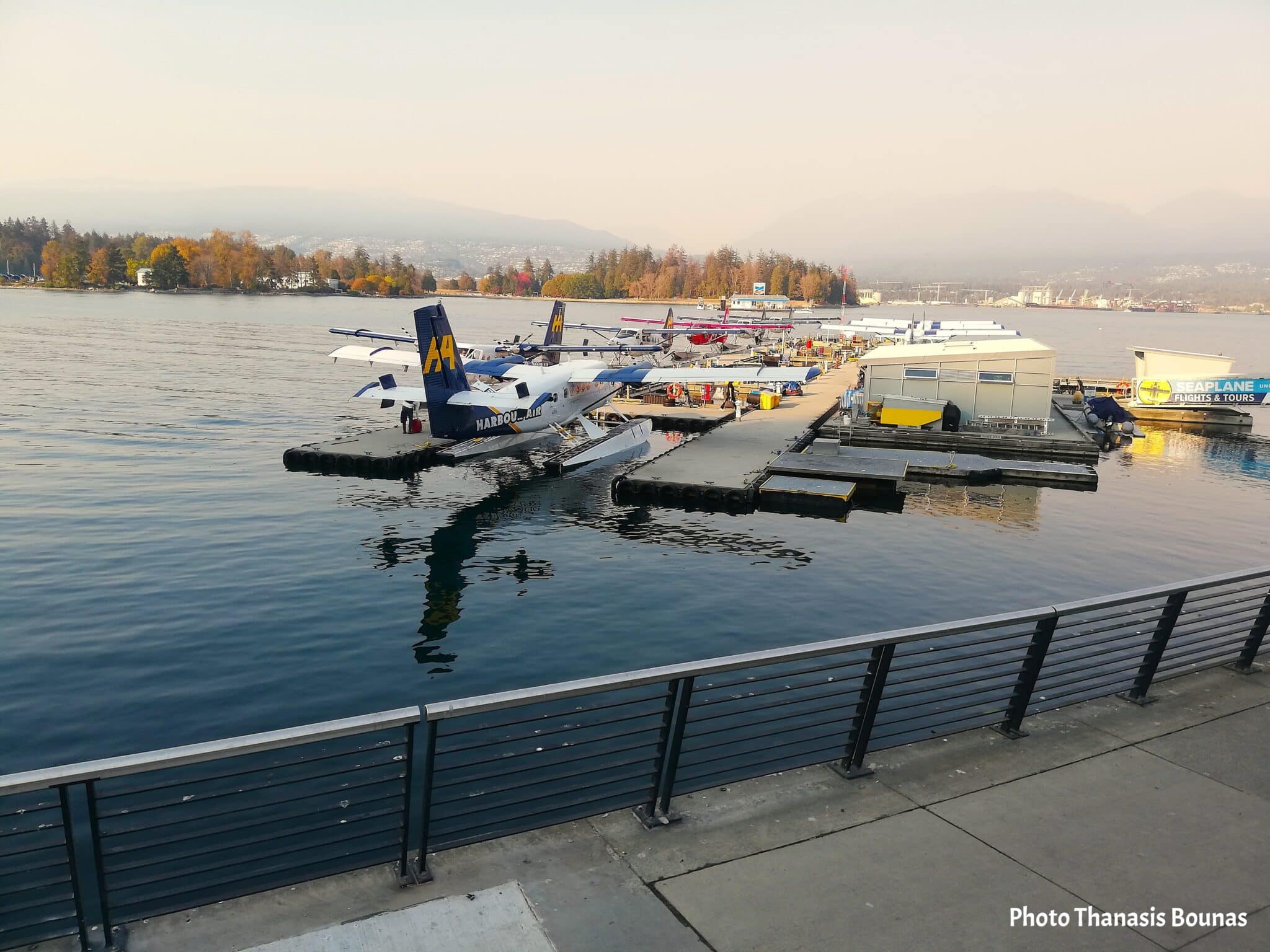
A floatplane may remain beside its dock while passengers board. Another aircraft might slowly taxi toward its departure area, while a third approaches the harbour after a coastal flight.
The scene changes continuously.
Reflections of aircraft appear on the water, small waves move between the floats, and the surrounding mountains provide a natural background.
On clear days, the contrast between the aircraft and the blue waters of Coal Harbour creates particularly striking photographic opportunities.
During softer morning or evening light, the atmosphere becomes quieter and more reflective.
For anyone interested in photography, transportation, or coastal landscapes, the harbour offers an unusual perspective on Vancouver.
Aviation as Part of British Columbia’s Coastal Identity
Seaplanes have become an enduring feature of transportation in British Columbia.
Their continued use reflects the relationship between the province’s geography and the need to connect communities across mountains, islands, and waterways.
At Vancouver Harbour, this relationship is visible every day.
Aircraft arrive from coastal destinations, passengers continue their journeys through the city, and new flights depart toward the islands and communities of the Pacific coast.
The harbour brings together modern aviation, maritime activity, and the natural landscape of western Canada.
Watching a seaplane rise from the water is a reminder that, in British Columbia, the sea is not simply a boundary between places.
It is also a pathway connecting them.
Be the first to comment