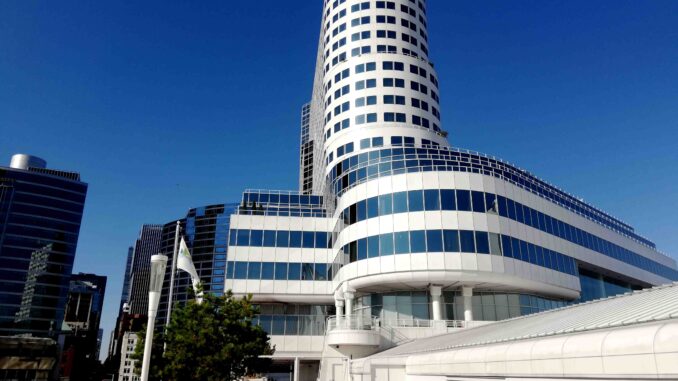
Where Land and Sea Shaped a City
The story of Vancouver, British Columbia, Canada, begins where towering forests meet the edge of the Pacific Ocean.
It is a city born from its geography — defined by water, mountains, and the unceded territories of Indigenous Nations who have lived here for thousands of years.
From these ancient roots grew a modern metropolis that remains forever tied to the land and sea that surround it.

Indigenous Foundations
Long before European contact, the area now known as Vancouver was home to the Musqueam, Squamish, and Tsleil-Waututh Nations.
Their villages, trade networks, and fishing sites extended across the Fraser River, Burrard Inlet, and False Creek.
They lived in harmony with the land, practicing sustainable fishing, harvesting, and governance systems that continue to guide stewardship today.
Vancouver’s true history begins with their enduring connection to this place.

First Contact and Exploration
The late 18th century brought European explorers to the coast.
In 1792, British Captain George Vancouver surveyed the region’s inlets and islands, lending his name to both the city and nearby Vancouver Island.
Spanish explorers, including José María Narváez and Juan Carrasco, also mapped the area’s waters.
These early encounters marked the beginning of profound changes that would reshape the land and its peoples.

The Birth of a Settlement
By the 1860s, logging had become the dominant industry along the coast.
A settlement grew around Hastings Mill, a sawmill built on Burrard Inlet in 1865.
Nearby, a lively neighborhood known as Gastown emerged — named after “Gassy” Jack Deighton, a saloon owner whose tavern became the social heart of the new community.
Wood from the forests of the North Shore and Fraser Valley fueled the global economy and the rise of a new city.

From Gastown to Granville
As trade expanded, the settlement was officially surveyed as Granville Townsite in 1870.
With sawmills, docks, and saloons filling the waterfront, it quickly became a vital link in British Columbia’s growing economy.
The arrival of the Canadian Pacific Railway (CPR) in the 1880s secured its future as a western terminus for cross-country trade.
The completion of the railway brought workers, settlers, and investors — and a new name: Vancouver.

The Great Fire of 1886
Vancouver was incorporated as a city in April 1886, but just two months later, disaster struck.
A massive fire — sparked by land-clearing burns — swept through the young city, destroying nearly every building in under an hour.
Undeterred, the citizens rebuilt almost immediately, constructing sturdier brick and stone buildings.
That resilience became a defining trait of Vancouver’s character.

Growth and Diversity
By the early 20th century, Vancouver had grown into the largest city in British Columbia.
Its harbor became one of the busiest on the Pacific, connecting Canada to Asia and the world.
Immigration from Europe, China, Japan, and India transformed the city into a multicultural mosaic.
Neighborhoods like Chinatown, Punjabi Market, and Strathcona emerged, each contributing to Vancouver’s evolving identity.

War, Industry, and Transformation
During World War II, Vancouver’s shipyards, mills, and factories supported the Allied war effort.
Women entered the workforce in large numbers, changing the city’s social fabric.
After the war, immigration surged again, and Vancouver’s skyline began to rise.
The 1950s and 1960s brought bridges, highways, and a vision of a cosmopolitan, global city.

The Modern Era
The late 20th century transformed Vancouver into a model of sustainable urban design.
Expo 86, held on the False Creek waterfront, marked a turning point — repurposing industrial lands into residential and cultural neighborhoods.
The city’s focus on public transit, green spaces, and mixed-use development set international standards for livability.
Events like the 2010 Winter Olympics further cemented Vancouver’s reputation as one of the world’s most beautiful and dynamic cities.

In Reflection
The history of Vancouver, British Columbia, Canada, is a story of reinvention, resilience, and respect for place.
From Indigenous villages to a modern global hub, every chapter reflects the city’s enduring connection to its natural surroundings.
To walk through Vancouver today is to experience that living history — a blend of cultures, ideas, and landscapes united by water and imagination.
The city remains, as ever, a place where the Pacific meets possibility.
Be the first to comment