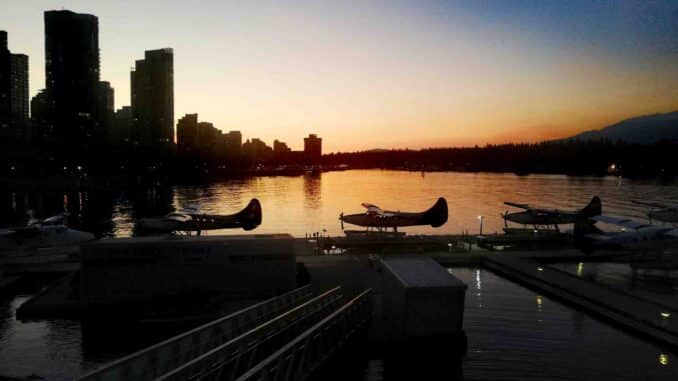
In Vancouver, British Columbia, aircraft do not always need a traditional runway to take flight. Along the waterfront of Coal Harbour, seaplanes rise from the water, passing the city’s modern skyline before continuing toward the mountains, islands, and coastal communities of Canada’s Pacific coast.
Watching a floatplane take off or land is one of Vancouver’s most distinctive aviation experiences. The aircraft approach the harbour at low altitude, their floats touching the water before they slow down and move toward the docks.
Behind this remarkable scene lies more than a century of aviation history. In a province shaped by mountains, forests, and an extensive coastline, seaplanes became an important connection between communities that were often difficult to reach by road.
Seaplanes in British Columbia | Floatplanes on the Water in Canada
The Early History of Seaplanes in British Columbia
The relationship between British Columbia and water-based aviation began during the early twentieth century, when aircraft were still a relatively new form of transportation.
One important milestone occurred in March 1919, when aviation pioneer William Boeing flew a Boeing C-700 floatplane carrying international airmail to Vancouver. This event demonstrated the growing possibilities of aircraft operating from water.
Another significant development followed in 1920 with the establishment of the Jericho Beach Air Station in Vancouver.
The station became the first air force establishment in British Columbia and played an important role in supporting government aviation services and the development of remote coastal communities.
During the following decades, floatplanes became increasingly useful for reaching locations where building conventional airports was difficult or economically impractical.
Aircraft could use suitable sheltered waterways as landing areas, making them particularly valuable along British Columbia’s rugged coast.
Their duties included transporting passengers, delivering supplies, supporting forestry operations, and providing access to isolated settlements.
The arrival of these aircraft gradually changed the relationship between coastal communities and the wider province.
Why Floatplanes Became Essential to Coastal Life
British Columbia’s geography created unusual transportation challenges.
Vancouver Island, the Gulf Islands, the Sunshine Coast, and numerous smaller coastal communities are separated by stretches of water. Mountain ranges and deep inlets also complicate overland travel.
Before modern transportation networks expanded, many communities depended heavily on boats for communication and supplies.
Floatplanes introduced a faster alternative for certain journeys.
They could connect coastal settlements with larger population centres, carry essential equipment, and provide access to remote forestry and fishing operations.
The aircraft were particularly suited to a landscape where water was abundant but suitable land for conventional runways was limited.
Over time, aviation became part of the economic and social history of the Pacific coast.
Even today, seaplanes remain an important transportation option for many communities and travellers throughout British Columbia.
Vancouver Harbour – Where Aviation Meets the City
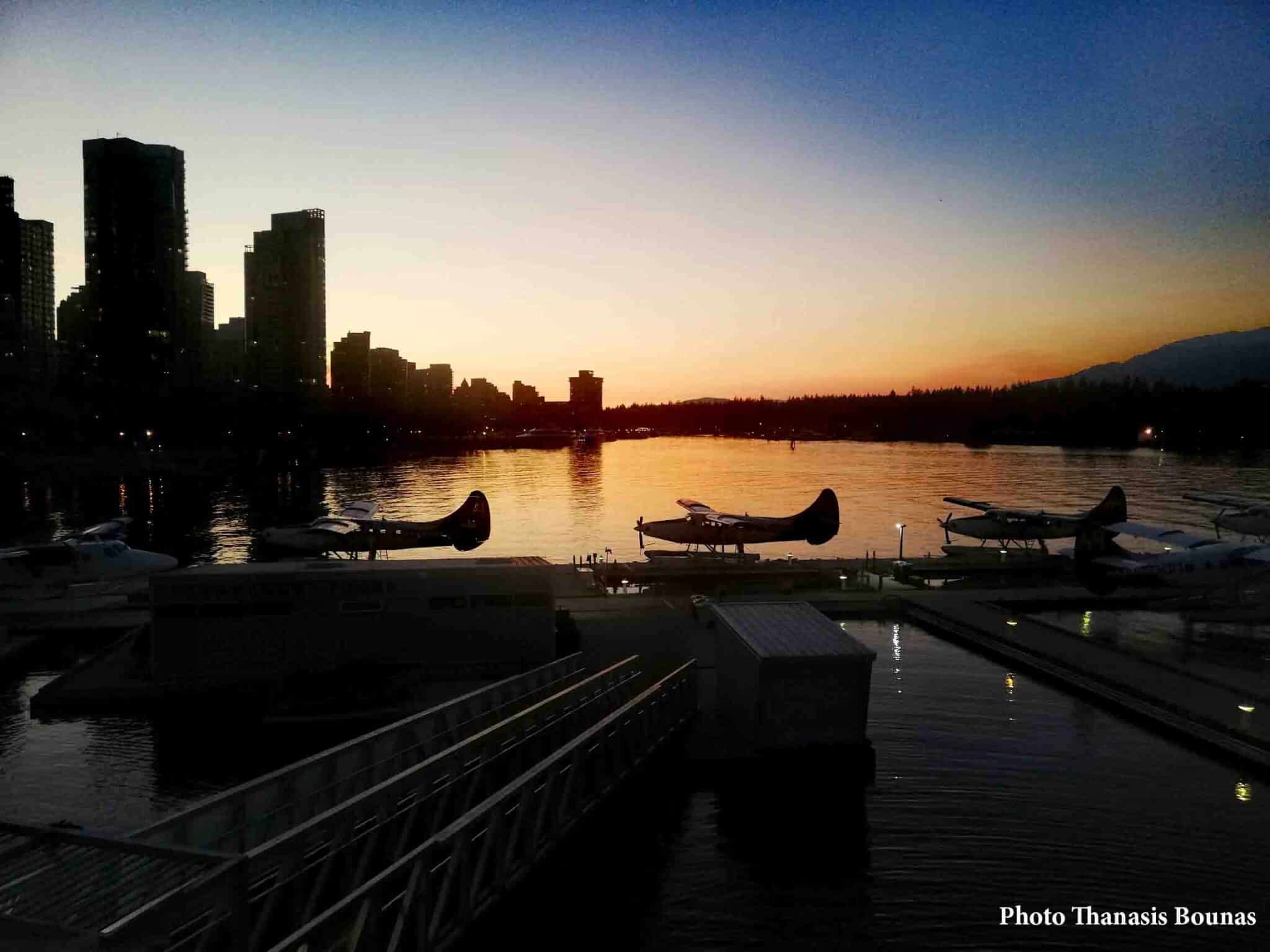
One of the most recognizable places to observe seaplanes in British Columbia is Vancouver’s Coal Harbour.
Located beside downtown Vancouver, the harbour offers an extraordinary combination of urban architecture, mountain scenery, and aviation activity.
Aircraft operate close to the Vancouver Convention Centre, Canada Place, and the waterfront promenade.
The surrounding buildings provide a dramatic background as seaplanes descend toward the water or climb into the sky.
The modern Vancouver Harbour Flight Centre opened for passenger service on May 25, 2011.
Its development created a permanent, purpose-built facility for seaplane operations along the waterfront.
Before the new terminal was established, floatplane operators used various temporary docks around Coal Harbour.
The terminal’s location also allows visitors to observe the aircraft from nearby public waterfront areas.
For photographers and aviation enthusiasts, the movement of seaplanes against Vancouver’s skyline provides a memorable opportunity to experience a working harbour.
The Development of Modern Seaplane Services
By the late twentieth century, commercial seaplane operations had become an established part of British Columbia’s transportation network.
An important development occurred in 1982, when Harbour Air was founded in Vancouver with two pilots and two aircraft.
The company initially served industries such as forestry, providing transportation to locations along the coast.
As demand increased, scheduled passenger services expanded.
Regular flights between Vancouver and Victoria began in 1996, followed by service to Nanaimo in 1998.
These developments helped strengthen the connections between mainland British Columbia and Vancouver Island.
Other routes gradually connected additional coastal destinations, offering travellers alternatives to longer journeys involving roads and ferries.
Today, seaplanes continue to support business travel, tourism, and transportation throughout the region.
Their presence in Vancouver Harbour reflects the continuing importance of aviation in a province where geography strongly influences how people move.
A Unique Aviation Experience on the Pacific Coast
For visitors exploring Vancouver, watching a seaplane land on the water offers a different perspective on the city.
Unlike conventional airports, where aircraft operate behind extensive airport infrastructure, the activity at Coal Harbour is visible from sections of the public waterfront.
The approach of an aircraft creates a distinctive moment.
Its wings stretch across the skyline, the floats descend toward the harbour, and the aircraft gradually settles onto the water.
The surrounding mountains and modern buildings make the scene particularly memorable.
Beyond Vancouver, the same type of aircraft continues to operate across a landscape of islands, inlets, and coastal settlements.
What began as an innovative transportation solution has become an enduring part of British Columbia’s identity.
Seaplanes represent a remarkable connection between the province’s aviation history and its natural geography.
For more than a century, they have helped bring distant communities closer together, demonstrating how technology can adapt to the challenges of Canada’s Pacific coast.
Be the first to comment