The sound of a powerful diesel locomotive moving through the landscape is a familiar part of life along the Fraser River in British Columbia. In Surrey, freight trains travel through railway corridors that have connected communities, industries, and ports for generations.
A Canadian National locomotive passing through this region offers more than an impressive display of railway engineering. It represents a transportation network that helped shape the development of western Canada.
Surrounded by trees, railway bridges, and the industrial landscape of the Lower Mainland, these trains provide a fascinating glimpse into the history of British Columbia and the continuing importance of rail transportation.
Freight Trains Along the Fraser River | Surrey BC, Canada
The Fraser River and the Beginning of Railway Transportation
Long before the construction of modern railways, the Fraser River served as a major transportation route through southwestern British Columbia.
Indigenous communities used the river for fishing, trade, and travel for thousands of years. Its waters connected settlements throughout the region and provided access to the interior.
During the nineteenth century, the river became increasingly important to commercial transportation. The Fraser River Gold Rush of 1858 brought thousands of newcomers into British Columbia, increasing the demand for reliable routes between settlements and trading centres.
New Westminster developed into an important river port, while communities south of the Fraser, including Surrey, gradually expanded.
The arrival of railway transportation introduced a new chapter in this history.
Railways could move heavy goods over long distances throughout the year, creating opportunities for agriculture, forestry, manufacturing, and international trade.
The Fraser River Valley became a natural transportation corridor, linking the Pacific coast with communities farther inland.
How Railways Helped Surrey Grow
Surrey was incorporated as a district municipality in 1879, at a time when much of the surrounding landscape consisted of forests, farms, and small settlements.
Transportation remained a major challenge. Roads were limited, and crossing the Fraser River often depended on ferry services.
The construction of railway lines gradually transformed these conditions.
The New Westminster Southern Railway began operating through Surrey in 1891, establishing connections with communities farther south.
Another major development followed on July 23, 1904, when the New Westminster Railway Bridge officially opened across the Fraser River.
The bridge provided a permanent connection between Surrey and New Westminster, carrying trains on its lower level and road traffic on its upper level.
Its completion improved access to markets and encouraged further development throughout the region.
In 1910, the British Columbia Electric Railway introduced its Fraser Valley interurban service, connecting communities between New Westminster and Chilliwack.
These trains carried passengers and freight, helping farmers, merchants, and residents travel between growing settlements.
Railways became an essential part of Surrey’s transformation from a largely rural municipality into an important urban and industrial centre.
Canadian National Railway and Modern Freight Transportation
The Canadian National Railway, commonly known as CN, became one of the most important railway systems in Canada during the twentieth century.
Formed through the consolidation of several railway companies beginning in 1919, Canadian National eventually developed a vast network connecting the Atlantic and Pacific coasts.
Its operations helped establish reliable transportation links between Canadian industries, inland distribution centres, and international ports.
Today, CN freight trains remain a familiar sight throughout parts of British Columbia.
Large diesel-electric locomotives haul long trains carrying containers, forest products, agricultural commodities, and other commercial goods.
The locomotive visible in this Surrey railway scene is part of that modern transportation landscape.
Its orange, black, and white appearance stands out against the surrounding greenery, while the heavy machinery reflects the enormous power required to move freight across long distances.
Although railway technology has changed dramatically since the nineteenth century, the fundamental purpose remains the same: connecting communities and moving goods efficiently across the country.
Railway Bridges and the Industrial Landscape of the Lower Mainland
One of the most interesting features of railway transportation in Surrey is its relationship with the Fraser River.
The river has always presented both opportunities and engineering challenges.
Bridges were necessary to connect railway networks on opposite banks, while their construction had to accommodate river navigation and changing water conditions.
The historic New Westminster Railway Bridge became an important part of this transportation system.
Farther along the river, additional railway corridors and industrial facilities developed as the Lower Mainland expanded.
Today, the landscape combines historic infrastructure with modern transportation systems.
Freight trains operate near warehouses, roads, industrial areas, and residential neighbourhoods.
The contrast is particularly striking when powerful locomotives pass through areas surrounded by trees and vegetation.
For visitors interested in railway photography, this combination of natural scenery and industrial engineering reveals a distinctive side of British Columbia.
It also demonstrates how transportation infrastructure has become part of the region’s identity.
Discovering British Columbia Through Its Railways
British Columbia is internationally recognized for its mountains, forests, lakes, and Pacific coastline. Yet its railway heritage offers another fascinating way to understand the province.
The history of Surrey and the Fraser River illustrates how transportation helped connect communities and support economic development.
Railways influenced the growth of New Westminster, the agricultural settlements of the Fraser Valley, and the expanding commercial networks of Vancouver.
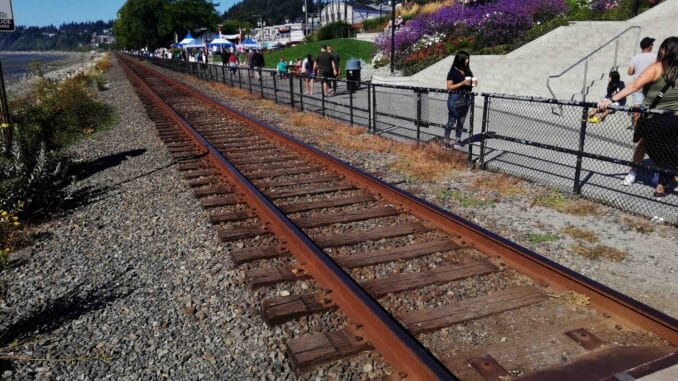
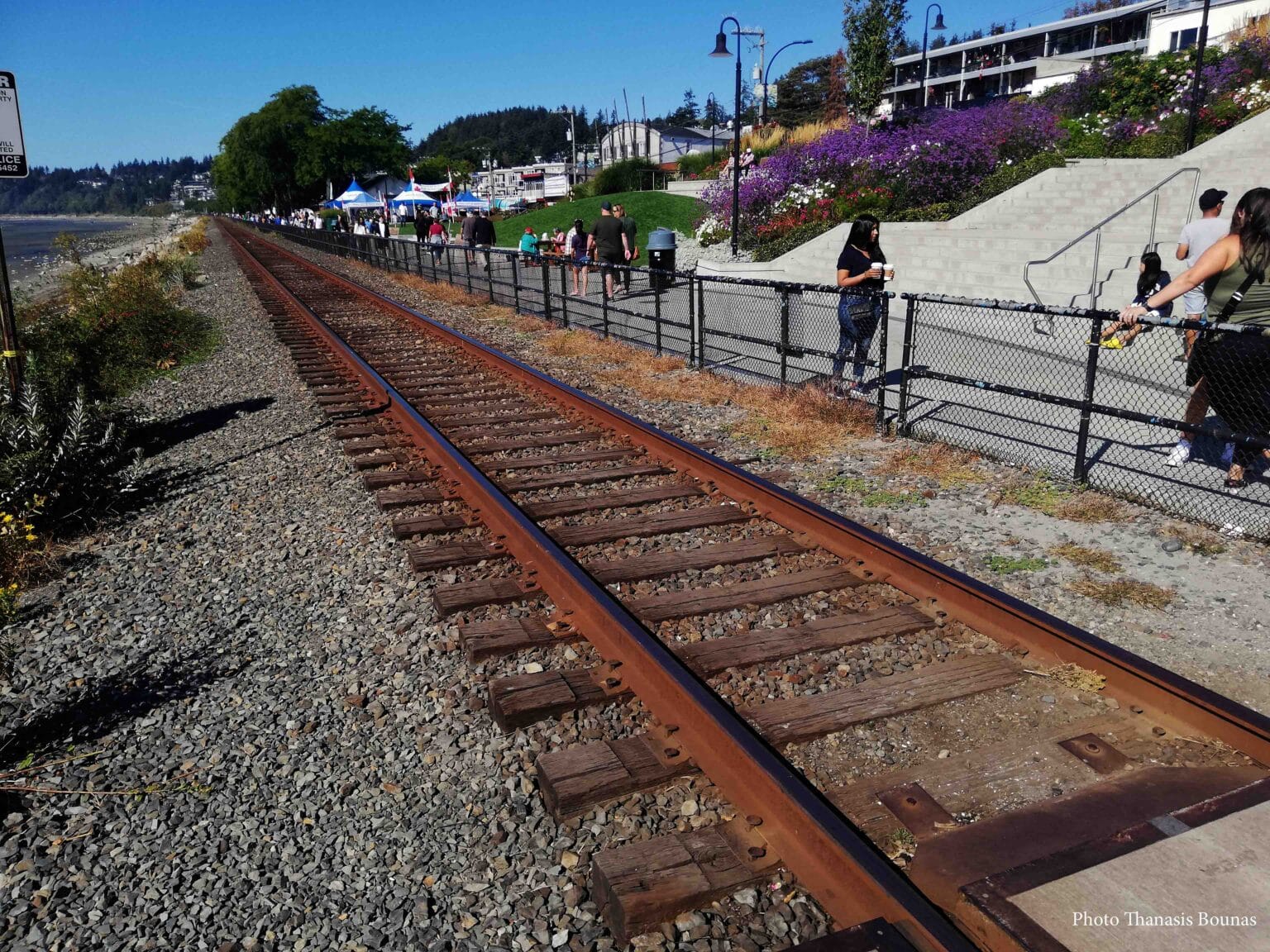
Even places such as White Rock have their own railway stories, with tracks running beside the waterfront and connecting the coastal landscape to a much larger transportation network.
Watching a freight train in Surrey brings these different histories together.
The locomotive moves through a landscape that has changed considerably over the past century, but the railway continues to serve its original purpose.
It connects places, carries the products of distant communities, and reminds us that the development of British Columbia has always depended on the relationship between geography, engineering, and transportation.
For those exploring the province beyond its famous natural attractions, the railways of the Fraser River offer a memorable perspective on Canada’s Pacific coast.
Be the first to comment