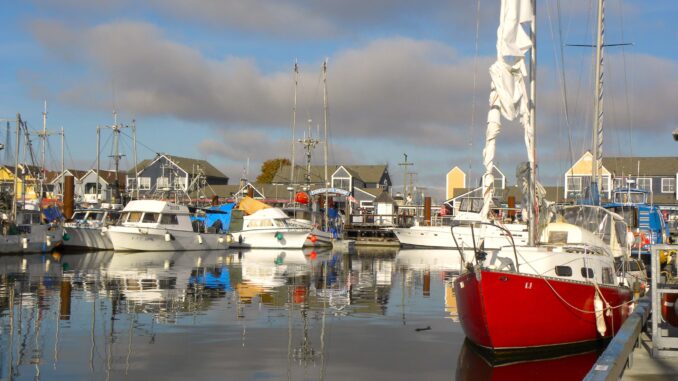
Where the River Meets the Sea
At the mouth of the Fraser River, on the southern edge of Richmond, British Columbia, Canada, lies Steveston Harbor — one of the most storied fishing ports on the Pacific coast.
For more than a century, this harbor has been a working waterfront, a cultural crossroads, and a living symbol of the province’s connection to the sea.
It is a place where tides carry history, and every dock tells a tale of labor, resilience, and community.

The Birth of a Fishing Village
Steveston’s story began in the late 1800s, when settlers recognized the Fraser River’s potential as one of the richest salmon-fishing areas in the world.
In 1880, entrepreneur William Herbert Steves — from whom the village takes its name — established the first cannery and began transforming the delta into a thriving fishing hub.
By the 1890s, Steveston Harbor was bustling with fishing boats, canneries, and warehouses, attracting workers from across Canada, Japan, China, and Indigenous communities.
The harbor quickly became known as the “Salmon Capital of the World.”

The Golden Age of Salmon Canneries
At the turn of the 20th century, more than 15 canneries lined the banks of the Fraser near Steveston.
Each summer, fleets of wooden gillnetters filled the harbor, their holds brimming with Pacific salmon.
The canneries processed thousands of fish daily, exporting British Columbia’s most prized resource to markets around the world.
The energy of the harbor was palpable — a blend of machinery, voices, and salt air that defined the region’s industrial rhythm.

A Multicultural Workforce
The success of Steveston Harbor British Columbia was built on the contributions of a diverse labor force.
Japanese Canadian fishermen dominated the fleets, renowned for their skill and craftsmanship.
Chinese and Indigenous workers staffed the canneries, while European immigrants managed shipping and trade.
Despite social barriers and hardship, these communities forged a shared maritime culture rooted in cooperation and perseverance.

The Challenges of War and Change
World War II marked one of the darkest chapters in the harbor’s history.
In 1942, Japanese Canadians — who made up the majority of Steveston’s fishing community — were forcibly removed from the coast.
Their boats and properties were confiscated, leaving the harbor eerily quiet.
Though the community eventually returned, this displacement left a lasting mark on Steveston Harbor and the collective memory of Richmond, British Columbia, Canada.

Postwar Renewal and Modernization
After the war, the fishing industry slowly recovered, adapting to new technology and regulations.
Steel vessels replaced wooden boats, and the harbor was rebuilt to accommodate modern fleets and processing facilities.
By the 1960s, Steveston had become one of the largest commercial fishing harbors in Western Canada.
It was not just a place of industry, but a renewed source of pride for a community determined to rebuild what had been lost.

Preserving Heritage Amid Progress
As global fishing patterns shifted in the late 20th century, Steveston faced new challenges — declining fish stocks and changing markets.
Yet rather than fade, the harbor evolved.
Historic canneries were restored, and the Gulf of Georgia Cannery became a national historic site, preserving the legacy of the industry for future generations.
Steveston’s balance of working harbor and heritage destination has become a model for coastal conservation in British Columbia.

A Harbor for All Seasons
Today, Steveston Harbor remains both a working port and a vibrant community hub.
Fishermen still unload their catches at the docks, while visitors stroll the boardwalk, savor fresh seafood, and watch the tide roll in.
Festivals, markets, and maritime events fill the calendar, reflecting a city that continues to celebrate its connection to the water.
The harbor endures — not as a relic, but as a living, breathing part of Richmond’s soul.

In Reflection
The history of Steveston Harbor in British Columbia, Canada, is a story of people and perseverance.
From its beginnings as a fishing frontier to its place today as a cultural landmark, the harbor captures the essence of coastal life.
It embodies the values of hard work, diversity, and renewal that define British Columbia’s spirit.
To stand on its docks is to look across both river and time — where the past still flows with every tide.
Behind every harbor and every plate of seafood lies a quieter story — the lives of the people who rise with the tide and return with the day’s catch. For readers who wish to linger a little longer on these human moments by the sea, the reflection Respect for the People Behind the Sea’s Harvest offers a thoughtful glimpse into the dignity, patience, and silent rhythm of those whose work begins where the water meets the shore.
Be the first to comment